
The project documentation maze
Managing project documents can quickly become overwhelming when files are scattered across email threads, shared drives, and personal folders. Teams waste valuable time searching for the latest version of a document or recreating files that already exist somewhere in the digital maze. Project document management software solves this challenge by creating a single source of truth for all project-related files.
The right document management system transforms how teams collaborate on projects. Instead of endless email chains asking "Where's the latest budget spreadsheet?" or "Who has the updated project plan?", teams can instantly access the files they need. This shift from chaos to clarity makes the difference between projects that run smoothly and those that constantly hit roadblocks.
What is project document management software?
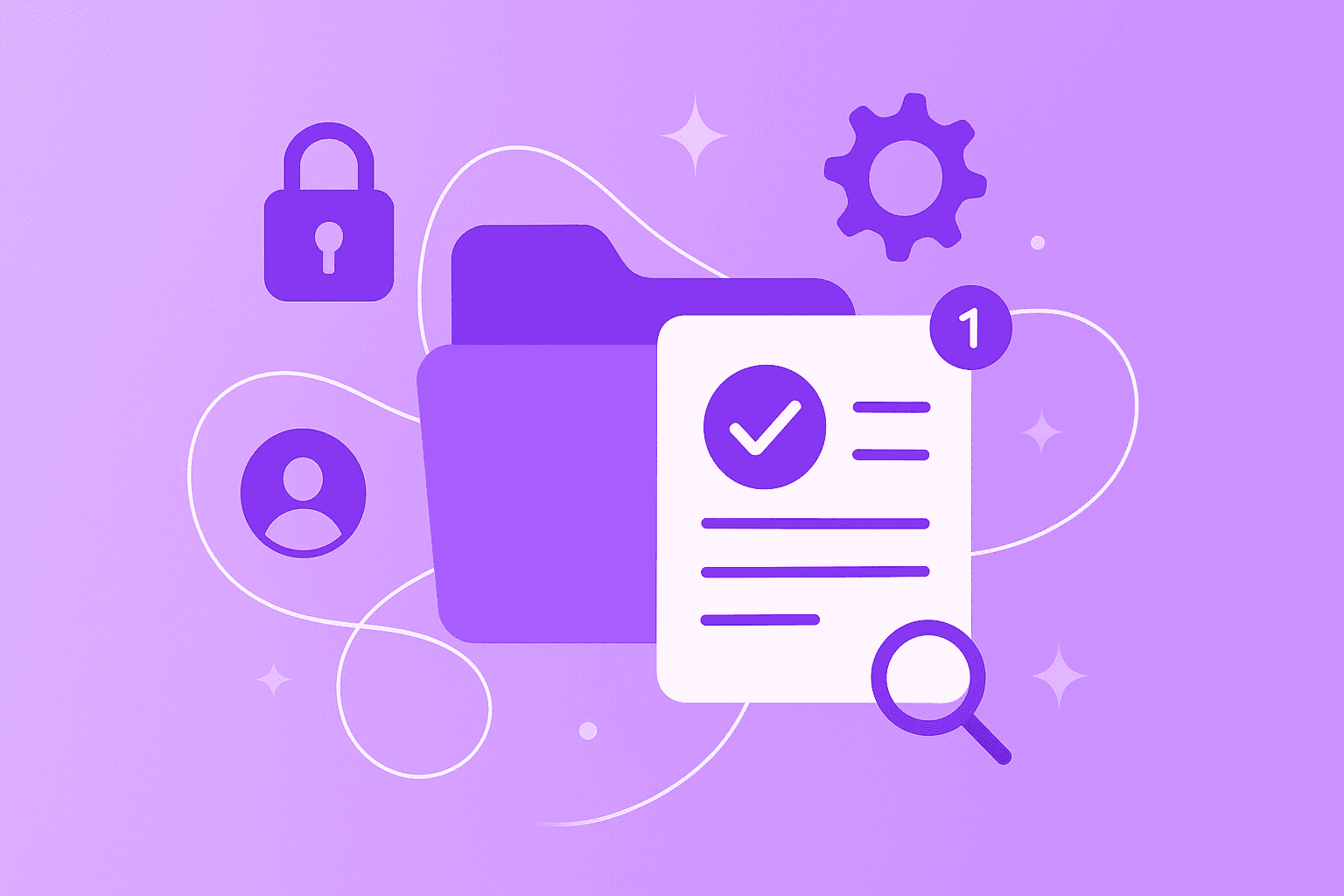
Think of project document management software as a digital filing cabinet that actually knows what's inside it. Unlike that messy shared drive where files disappear into nested folders, these systems organize, track and connect all your project documents in one searchable place. You can upload contracts, plans, reports and meeting notes — then find them instantly when you need them.
What sets these tools apart from basic cloud storage like Google Drive or Dropbox? They're built specifically for project work. When you attach a budget spreadsheet to a project task, everyone working on that task can see it right away. No more hunting through folders or asking teammates to reshare links.
The best part? These systems automatically track who changed what and when. If someone accidentally deletes important information or you need to see what a document looked like last month, you can restore previous versions with a few clicks. This version control feature alone saves teams hours of confusion and prevents costly mistakes.
Key features that make a difference
Modern document management systems for projects share several game-changing features that simplify your workday:
Central storage hub: every project file lives in one secure location, searchable by name, content, or tags
Version tracking: see who edited documents and when, with the ability to restore previous versions
Permission controls: decide who can view, edit, or share specific documents based on their role
Smart search: find files using keywords, even if you can't remember the exact file name
Tool connections: link with project management platforms, chat apps, and industry-specific software
These features work together to solve real problems teams face daily. When documents connect directly to tasks, you spend less time switching between apps and more time getting work done.
Choosing the right project document management system
Start with your team's workflow
Before comparing features and prices, map out how documents move through your organization. Who creates project proposals? Who reviews contracts? Who needs access to final deliverables? Understanding these patterns helps you pick a tool that fits your actual workflow, not just one that looks good in demos.
Ask yourself practical questions:
How many people need access to project documents?
Do field workers need mobile access to files?
Are there approval processes that slow down projects?
What compliance or security requirements do you face?
Consider your existing tools
The best document management system is one that plays nicely with software you already use. If your team lives in Slack, find a solution that lets you share and discuss documents without leaving chat. If you use specialized construction management software, make sure documents can flow between systems.
Think about adoption and training
Look for platforms with clean, intuitive interfaces that don't require a manual to understand. Check if they offer training resources, video tutorials or customer support to help during rollout.
Common document management challenges (and how to fix them)
Teams implementing new systems often hit similar roadblocks. Here's how to avoid them:
The naming nightmare: when everyone names files differently ("Final_v2_REVISED_March.docx"), finding anything becomes impossible. Solution: Establish naming conventions before migrating files. Use clear patterns like "ProjectName_DocumentType_Date."
Version confusion: multiple people editing the same document leads to conflicting versions and lost work. Solution: Use systems with automatic version control and check-in/check-out features for critical documents.
Access chaos: sensitive documents end up in the wrong hands, or team members can't access files they need. Solution: Set up role-based permissions from day one and review them regularly as projects evolve.
Mobile limitations: field teams can't access documents at job sites, causing delays and errors. Solution: Choose platforms with robust mobile apps and offline capabilities.
15 best project document management software options
1. MeisterTask
MeisterTask takes a unique approach by combining task management with document storage. Instead of juggling separate systems, you attach files directly to the tasks they relate to. Working on a marketing campaign? The creative brief, design files and approval documents all live right with the task.
The built-in Notes feature lets teams create and share project documentation without leaving MeisterTask. Draft meeting minutes, create project wikis or outline processes — all in the same place you manage tasks. This integration keeps documentation current because it evolves alongside your actual work.
For teams concerned about data privacy, MeisterTask hosts all data in secure EU data centers. This makes it ideal for European organizations or anyone working with strict privacy requirements. The platform holds ISO 27001 certification and maintains full GDPR compliance.
2. Procore
Built specifically for construction teams, Procore handles the unique challenges of managing blueprints, permits and field documentation. Mobile apps work offline, letting field teams access critical documents even without internet. The platform excels at managing large drawing sets and tracking revisions across complex construction projects.
3. M-Files
M-Files uses metadata-based organization instead of traditional folders. Tag documents with project names, document types or custom attributes, then find them instantly regardless of where they're stored. This approach works particularly well for organizations with complex compliance requirements or those managing documents across multiple projects simultaneously.
4. Monday.com
Known primarily for project management, Monday.com includes robust document handling capabilities. Files attach to specific items on visual project boards, making it easy to see which documents relate to which project phases. The platform's automation features can route documents for approval or notify teams when files are updated.
5. Smartsheet
Smartsheet combines spreadsheet-style project tracking with document management. Teams familiar with Excel find the interface intuitive, while powerful automation handles document workflows behind the scenes. The platform particularly suits teams managing complex projects with lots of interconnected data and documentation.
6. Autodesk Construction Cloud
Designed for architecture and construction professionals, this platform manages everything from CAD files to project correspondence. Real-time collaboration on drawings, automatic clash detection and mobile markup tools make it invaluable for technical teams. The system handles massive file sizes that would choke general-purpose tools.
7. Microsoft SharePoint
SharePoint integrates deeply with Office 365, making it a natural choice for organizations already using Microsoft tools. Create team sites for projects, co-author documents in real-time and maintain detailed permission controls. While powerful, it requires more setup and training than simpler alternatives.
8. Box
Box focuses on secure file sharing and collaboration across teams. Advanced security features include watermarking, access expiration and detailed audit trails. The platform connects with over 1,500 other apps, making it highly adaptable to different workflows.
9. Zoho Projects
Part of the larger Zoho suite, this tool combines project planning with document management at an affordable price. Small teams appreciate the straightforward interface and included features like time tracking and issue management. Documents link directly to tasks, milestones and discussions.
10. Wrike
Wrike offers sophisticated project and document management for larger teams. Custom workflows automate document approval processes, while built-in proofing tools streamline creative reviews. The platform scales well from small teams to enterprise deployments.
11. Airtable
Airtable reimagines databases as user-friendly, visual workspaces. Attach documents to records, create custom views for different team members and build automated workflows without coding. It's particularly good for teams who need flexibility in how they organize and view project information.
12. Notion
Notion combines notes, databases and project management in one tool. Create project wikis with embedded documents, build custom databases for file organization, and collaborate on documents in real-time. The flexibility can be overwhelming initially but allows teams to build exactly what they need.
13. ClickUp
ClickUp aims to replace multiple tools with one platform. Document management features include in-app document creation, version history and deep search capabilities. The extensive feature set suits teams wanting everything in one place but may overwhelm those seeking simplicity.
14. Basecamp
Basecamp takes a deliberately simple approach to project management and document storage. Message boards, to-do lists and file storage live together in project-specific spaces. Teams tired of complex tools appreciate the straightforward design and flat pricing model.
15. Google Workspace
While not purpose-built for project management, Google Workspace remains popular for document collaboration. Real-time editing, generous storage and familiar interfaces make it accessible for any team. Integration with project management tools through third-party connectors adds missing functionality.
Special considerations for construction projects
Construction document management faces unique challenges that general-purpose tools often can't handle. Field teams need access to large blueprint files on tablets at job sites with spotty internet. Plans change daily based on field conditions, requiring immediate distribution to prevent costly errors.
Successful construction document management requires:
Mobile apps with offline sync capabilities
Support for large CAD and PDF files
Drawing markup and measurement tools
Integration with construction-specific software
Detailed permission controls for subcontractors
The right construction document management software replaces rooms full of paper plans with instant digital access. Field teams always have current drawings, reducing rework and safety risks from outdated information.
Security and compliance considerations
Look for platforms offering:
Encryption: both during file transfer and storage
Access logs: complete audit trails of who viewed or edited files
Compliance certifications: ISO 27001, SOC 2, or industry-specific standards
Data location: know where your files are stored and which laws apply
For European teams or those handling EU citizen data, GDPR compliance becomes non-negotiable. Choose platforms that clearly explain their data handling practices and offer data processing agreements.
Making project documents work for your team
The right project document management software turns document chaos into organized, searchable information that moves your projects forward. Whether you choose a simple solution like MeisterTask that combines tasks with documents, or a specialized platform for construction projects, the key is picking one that matches how your team actually works.
Start small with a pilot project, establish clear naming conventions and permissions, then expand as your team gets comfortable. The time invested in setting up proper document management pays off quickly through fewer lost files, less version confusion and faster project completion.