

What is a project bottleneck
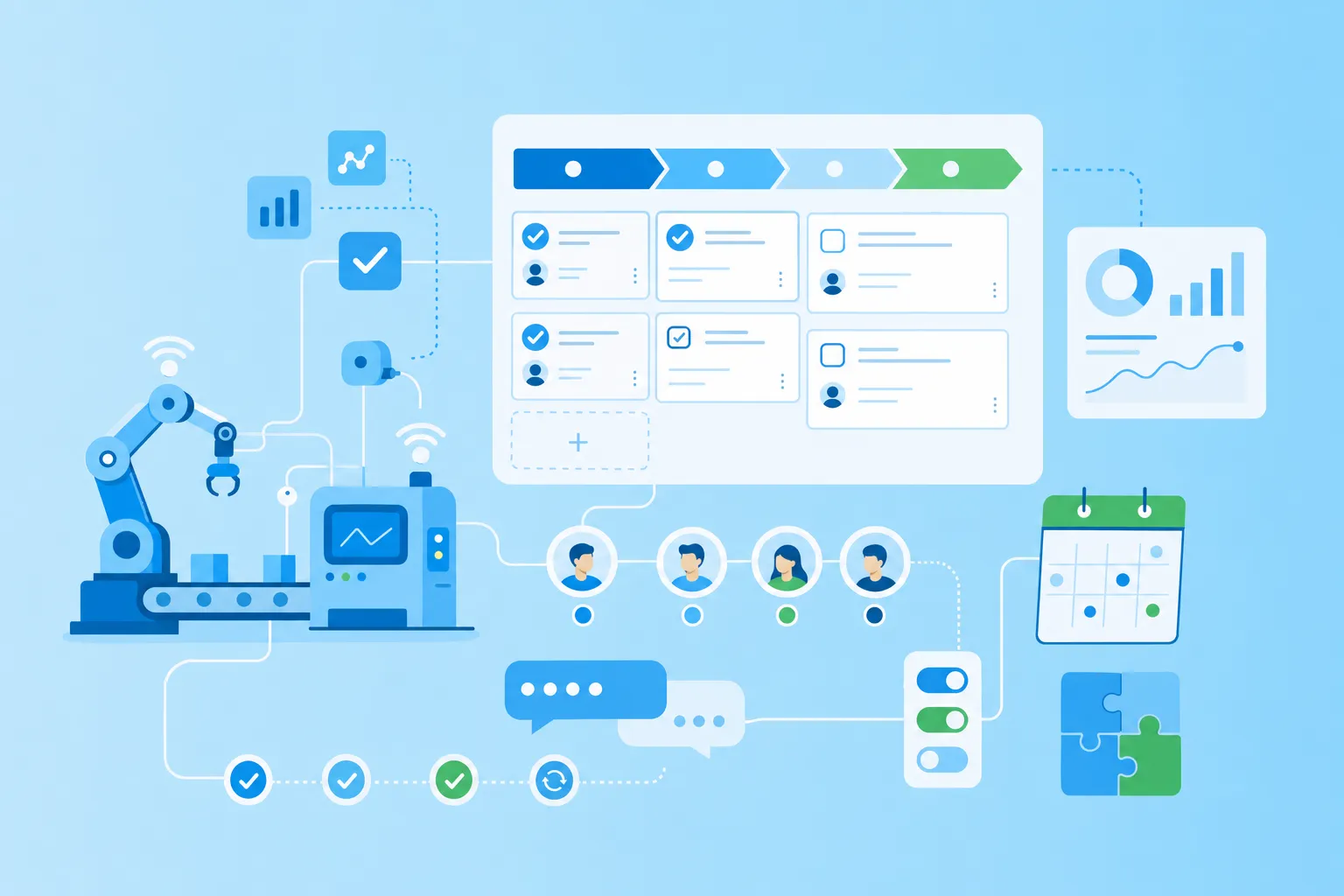
Picture a busy highway where three lanes suddenly merge into one. Traffic slows to a crawl, and everyone's journey takes longer than planned. That's exactly how project bottlenecks work — they're points in your workflow where work piles up because one stage can't handle the volume coming through.
A bottleneck differs from a general delay. While a delay might affect one task, a bottleneck creates a domino effect throughout your entire project. You might also hear the term "constraint" — it means the same thing: the limiting factor that determines how fast your whole team can move.
Common bottleneck scenarios include:
Approval queues: Tasks waiting for sign-off from a single decision-maker
Resource shortages: One team member handling multiple critical tasks
Blocked tasks: Work that can't proceed until dependencies are resolved
Signs your workflow is hitting a bottleneck
Bottlenecks rarely announce themselves with flashing warning lights. Instead, they reveal themselves through patterns of frustration and delay that gradually become your team's new normal. Recognizing these warning signs early can save your project from spiraling into chaos.
Watch for these key indicators:
Work piling up in one area: tasks accumulate at a specific stage while other stages sit empty
Team members waiting: people regularly report they're blocked or waiting on someone else
Missed deadlines becoming routine: due dates slip consistently on similar types of tasks
One person constantly overwhelmed: the same team member is always the holdup
Frequent escalations: stakeholders regularly ask why things are taking so long
How to analyze and identify bottlenecks
Before you can fix a bottleneck, you have to find it. This requires stepping back to examine your entire workflow systematically, not just looking at individual tasks that seem slow.
1. Map out the project process
Start by visualizing every step from project kickoff to completion. Draw out each stage of work and every handoff between team members or departments. Document who's responsible at each stage and how work moves from one person to the next. Kanban boards naturally provide this visual workflow map, making bottlenecks easier to spot.
2. Identify recurring queues or backlogs
A queue forms when work waits to be started, while a backlog consists of tasks that have started but remain unfinished. Look at your workflow map and note where tasks consistently pile up. Track how long tasks sit in each stage over a one-week period. The stage with the longest wait time typically reveals your primary bottleneck.
3. Pinpoint resource constraints
Resource constraints occur when people, tools, or capacity can't keep up with demand. Examine whether bottlenecks happen because one person, team, or tool is overloaded. Common resource bottlenecks include:
Single approver: all decisions flow through one person
Specialized skills: only one team member knows how to do something
Shared equipment: multiple teams compete for the same tools
4. Gather team feedback
Your team members experience delays firsthand, making them your best source of bottleneck intelligence. Ask specific questions like "Where do you spend time waiting?" and "Which approvals take longest?" People closest to the work often spot problems that leadership misses.
The impact of bottlenecks on project success
Unresolved bottlenecks create cascading problems throughout your project. What starts as a minor slowdown in one area can quickly spiral into project-wide dysfunction.
Bottlenecks lead to:
Delayed delivery: projects miss deadlines because work gets stuck at critical stages
Increased costs: team members sit idle waiting for bottlenecks to clear, wasting billable hours
Reduced team morale: constant delays and rework frustrate team members and cause burnout
Stakeholder dissatisfaction: clients and executives lose confidence when timelines slip repeatedly
Reduced throughput: your team completes fewer projects overall because work moves slowly through the system
8 strategies to eliminate bottlenecks
These strategies work together to create smoother project flow. You don't have to pick just one — different bottlenecks require different approaches.
1. Improve task prioritization
Poor prioritization creates artificial bottlenecks by overwhelming team members with competing "urgent" tasks.
Implement a clear prioritization framework like the Eisenhower Matrix to help team members focus. Limit work in progress so people complete tasks before starting new ones.
2. Set WIP limits for better flow
Work in progress (WIP) limits cap how many tasks can be active at once in each workflow stage. These limits prevent overloading and force teams to finish work before starting more. To set initial WIP limits, count current tasks in each stage and reduce by 20-30%. This core Kanban principle reduces context switching and helps work flow more smoothly.
3. Streamline approvals and communication
Approvals rank among the most common project bottlenecks. Establish clear approval paths so everyone knows exactly who signs off on what. Set approval service level agreements (SLAs) to make sure decisions happen within defined timeframes. Consider delegating approval authority to reduce single points of failure.
4. Balance resource allocation
Resource allocation means distributing work across team members based on capacity and skills. When one person becomes a bottleneck, examine their workload and redistribute tasks. Cross-train team members so critical skills aren't concentrated in one person. Use workload views to visualize who's overloaded and who has availability.
5. Use a Kanban board for real-time visibility
Kanban boards visualize work moving through stages, making bottlenecks immediately visible. Columns represent workflow stages while cards represent individual tasks. When one column fills up while others sit empty, you've found your bottleneck. Digital Kanban tools like MeisterTask provide this visibility for distributed teams, helping teams self-organize around bottlenecks.
6. Apply risk management early
Proactive risk management prevents bottlenecks before they occur. During project planning, ask "What could slow us down?" and "Where might work get stuck?" Create contingency plans for likely bottlenecks:
Backup approvers: designate alternates for key decision-makers
Alternative resources: identify who can step in if someone's unavailable
Buffer time: build extra time into stages prone to delays
7. Automate recurring steps
Repetitive manual tasks often become bottlenecks, especially when they require specific people. Identify routine steps that could be automated: status updates, notifications, data entry and approvals for low-risk items. Even small automations compound to significant time savings.
8. Adopt an iterative mindset
Bottleneck elimination is ongoing work, not a one-time fix. Make small changes, measure their impact, and adjust your approach based on results. Schedule regular retrospectives where teams review what slowed them down and test solutions. As you resolve one bottleneck, another often emerges — this is normal and expected.
Which metrics help you track progress
These three metrics work together to show whether your bottleneck strategies are working:
Metric
Definition
What it reveals
Cycle time
Time from when work starts to when it's completed
How long individual tasks take to move through your workflow
Throughput
Number of tasks completed in a given period
Your team's delivery rate
WIP (work in progress)
Number of tasks actively being worked on
Whether you're overloading your workflow
The ideal pattern shows stable or decreasing cycle time, steady or increasing throughput and controlled WIP. When cycle time increases while WIP stays high, you've likely got a bottleneck forming. Track these metrics weekly to spot trends early.
Continuous improvement for lasting results
Bottleneck management isn't a project with an end date — it's an ongoing practice. Workflows change, teams evolve, and new bottlenecks emerge.
Build these continuous improvement practices:
Schedule regular workflow reviews: set aside time monthly or quarterly to analyze your process
Celebrate bottleneck discoveries: finding a bottleneck is progress, not failure
Empower teams to experiment: let people test small process changes
Document what works: keep a record of successful solutions
Track metrics consistently: monitor cycle time, throughput, and WIP over time
Move your team forward smoothly
Bottlenecks are a normal part of project work, but they don't have to derail your timelines. By systematically identifying and eliminating them using these strategies, you can keep projects moving forward predictably.
The benefits of effective bottleneck management include:
Deliver projects on time more consistently
Reduce team frustration and burnout
Improve stakeholder confidence
Complete more work with the same resources
Build a more resilient, adaptive workflow
Ready to visualize your workflow and spot bottlenecks before they cause delays? MeisterTask's intuitive Kanban boards give your team real-time visibility into where work is flowing — and where it's getting stuck.