
Choose the right method at the right time
Ever felt overwhelmed trying to organize your work? You're not alone. Many professionals struggle to understand when they need simple task tracking versus comprehensive project coordination.
The confusion between task management and project management costs teams valuable time and energy. While both approaches help organize work, choosing the wrong one can lead to missed deadlines, frustrated team members and wasted resources.
What is task management?
Task management is the process of tracking and organizing individual pieces of work from start to finish. Think of it as a systematic way to handle your to-do list — you know what needs doing, who's doing it and when it needs to be done.
At its core, task management focuses on single, actionable items with clear outcomes. When you assign someone to "update the website homepage" or "send the monthly newsletter," you're managing tasks. These are specific actions that one person can complete independently.
The key characteristics that define task management include:
Individual ownership: each task belongs to one person who takes responsibility from start to finish
Short timeframes: most tasks take hours or days to complete, rarely stretching beyond a week
Clear endpoints: you know exactly when a task is done — the email is sent, the report is submitted and the bug is fixed
Even the most complex projects break down into individual tasks that team members complete one by one.
What is project management?
Project management brings together multiple related tasks to achieve a bigger goal. Unlike managing individual tasks, project management requires you to think about how different pieces of work connect and depend on each other.
Every project has a clear beginning and end, with specific objectives to meet along the way. A project manager oversees the entire journey, making sure all the moving parts work together smoothly. This means tracking not just what needs to be done, but also when, by whom and in what order.
The defining features of project management include:
Multiple components: projects contain many tasks that contribute to the final outcome
Extended timelines: projects typically run for weeks, months or even years.
Team coordination: success depends on multiple people working together effectively
Resource planning: you need to manage budgets, tools and people throughout the project lifecycle.
Five critical differences
Now that we've covered the basics, let's explore the key differences between task and project management. Understanding these distinctions helps you choose the right approach for your work.
1. Scope and complexity
The most fundamental difference lies in scope. A task is one specific action, while a project is a collection of related tasks working toward a larger goal.
Consider these examples:
Task: write a blog post about industry trends
Project: launch a content marketing campaign with 12 blog posts, social media promotion and email newsletters
The single blog post is straightforward — one person writes it, edits it and publishes it. The content campaign involves research, planning, multiple writers, designers, social media managers and ongoing analysis.
This scope difference affects everything from planning to execution. Tasks can often start immediately, while projects require upfront planning to map out all the components.
2. Timeline and milestones
Tasks have one deadline. Projects have many milestones along the way. This creates fundamentally different planning and tracking needs.
When you're managing a task like "create presentation slides," you track progress toward that single deadline. But when you're managing a project like "organize annual conference," you're juggling multiple deadlines:
Task management
Project management
Single due date
Multiple milestones throughout
Hours to days
Weeks to months (or longer)
Linear progress
Parallel workstreams happening simultaneously
Simple tracking
Complex dependencies between deadlines
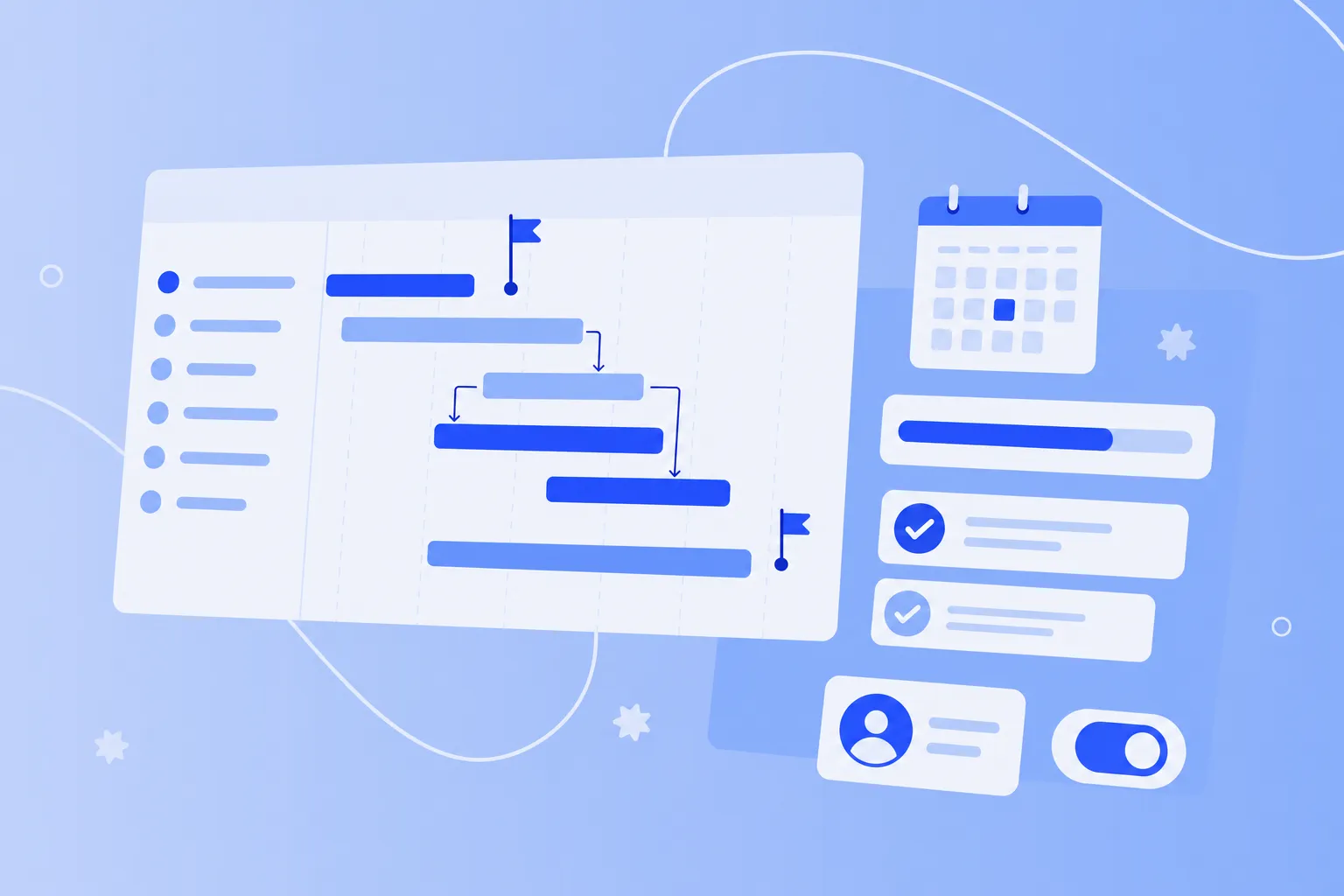
Projects often require Gantt charts or timeline views to visualize how different pieces fit together over time.
3. Resource allocation
Managing resources for a single task is straightforward — you need one person with the right skills and maybe a few tools. Project resource management is a different game entirely.
Projects require you to balance multiple resources across many tasks:
Team members with different skills working on various components
Budget allocation across different project phases
Tools and equipment shared between team members
External vendors or contractors contributing at specific times
This complexity means project managers spend significant time planning resource allocation before work begins, then adjusting as the project progresses.
4. Team collaboration
Task management often happens in isolation. Even when tasks involve handoffs between team members, the collaboration is usually simple — person A completes their part and passes it to person B.
Project management demands continuous collaboration. Team members work on interdependent tasks where delays in one area affect others. This creates needs for:
Regular team meetings to sync progress
Shared documentation everyone can access
Clear communication channels for questions and updates
Visibility into what others are working on
Modern tools like MeisterTask support both approaches, letting teams start with simple task tracking and add project management features as collaboration needs grow.
5. Measurement of success
How you measure success differs completely between tasks and projects.
You sent the email or you didn't. The bug is fixed or it isn't.
Project success involves multiple dimensions:
On-time delivery: did you meet the project deadline?
Budget adherence: did you stay within financial constraints?
Quality standards: does the outcome meet expectations?
Strategic objectives: did you achieve the business goals?
This multi-faceted measurement requires ongoing monitoring throughout the project lifecycle, not just checking off completion at the end.
How to choose the right approach
Both task management and project management have their place in modern work. The key is matching your approach to your actual needs. Here's how to make that decision.
1. Evaluate your goals
Start by examining what you're trying to accomplish. Ask yourself these questions:
Is this a one-time activity or part of something bigger?
Can one person complete this independently?
Are there dependencies where one piece of work affects another?
Do you need to coordinate multiple people or resources?
If you answered yes to the last two questions, you're looking at project management territory.
2. Assess team size and roles
The size and structure of your team influences your management approach. Solo workers and small teams doing independent work often thrive with task management alone.
Larger teams or work requiring close coordination benefits from project management structure. The added planning overhead pays off when you need multiple people working in sync toward shared goals.
3. Determine tools needed
Different features support different management styles. Understanding what you need helps you pick the right tools:
Task management features:
Task creation and assignment
Due date tracking
Basic status updates (to-do, doing, done)
Personal task lists
Project management features:
Timeline and Gantt chart views
Dependency tracking between tasks
Resource allocation tools
Progress reporting and analytics
Platforms like MeisterTask provide both sets of features, so teams can use what they need without juggling multiple tools.
4. Review budget and resources
Your available resources affect your management approach. Task management typically requires minimal investment — even a simple spreadsheet can work for basic needs.
Project management may require more sophisticated tools and dedicated planning time. However, the cost of not having proper project management when you need it — missed deadlines, confused team members and budget overruns — often exceeds the investment in doing it right.
Common mistakes to avoid
Learning from others' mistakes saves you time and frustration. Here are the most common pitfalls teams encounter:
Using project management for simple tasks creates unnecessary overhead. If one person can complete something in a day without dependencies, you don't need Gantt charts and status meetings.
Treating complex projects as task lists leads to chaos. When multiple people work on interconnected pieces, simple task tracking can't provide the coordination you need.
Refusing to adapt your approach as work evolves causes problems. What starts as a simple task might grow into a project. What begins as a project might streamline into routine tasks over time.
Splitting work across too many tools creates confusion. When tasks live in one place and projects in another, important work falls through the cracks.
Ready to streamline your work?
Task management and project management serve different purposes in organizing work. Tasks focus on individual actions with specific outcomes, while projects coordinate multiple tasks toward larger goals. Understanding when to use each approach — and having tools that support both — sets your team up for success.
The right approach depends on your specific situation. Many teams use both methods for different types of work, applying task management to daily operations and project management to strategic initiatives.
MeisterTask supports both task and project management in one intuitive platform. Whether you're tracking personal to-dos or coordinating complex team projects, you'll find the features you need without the complexity you don't.